
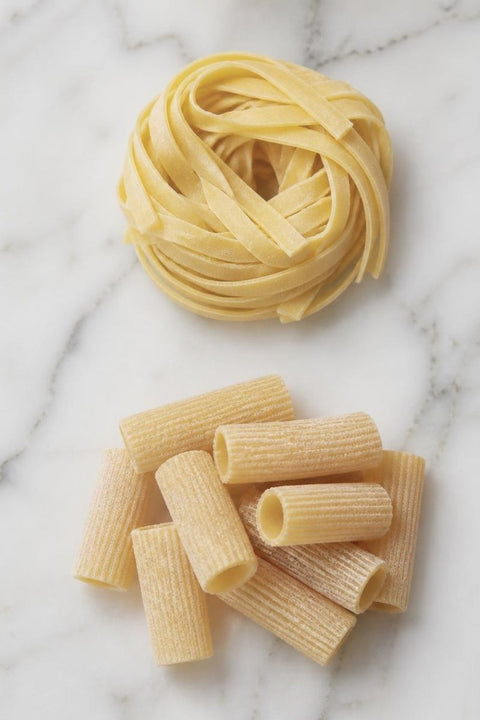
Somewhere along the line, modern food marketing brainwashed diners into believing a simple equation: Fresh = Luxury, Dry = Cheap Grocery Box.
Upscale Italian menus love to brag about "Housemade Fresh Pasta" like it’s a gold medal, leaving people to assume that anything extruded or dried is just a lazy shortcut.
Here is the dirty little culinary secret: in Italy, that assumption gets laughed out of the kitchen.
The fundamental divide in great pasta making isn't actually "fresh versus dry." At DSM Pasta Co., we make and sell our extruded pasta fresh right out of the die, as well as slowly air-dried for your pantry.
The real distinction that dictates how you cook and eat comes down to two completely different craft traditions: Hand-Rolled Egg Pasta versus Bronze-Extruded Semolina Pasta.
1. Hand-Rolled & Sheeted Egg Pasta (Pasta all'Uovo)
-
The Build: Soft wheat flour (Tipo 00) and fresh whole egg yolks.
-
The Method: Kneaded into a pliable, tender dough, rolled into thin sheets with a rolling pin or laminator (sfogliatrice), and hand-sliced into ribbons or wrapped around stuffed centers.
-
The Profile: Silky, supple, delicate, and melt-in-your-mouth tender.
-
Where It Shines: Stuffed parcels (Ravioli, Tortellini, Agnolotti) and delicate, velvety coatings like melted sage butter, white truffle oil, or light cream reductions.
Rolled egg pasta is a masterpiece of tenderness. It cooks in ninety seconds flat. But because soft wheat and egg dough lacks a rigid, architectural gluten spine, it has zero interest in wrestling heavy, rustic sauces. Spoon a slow-simmered braised short rib or chunky sausage ragù over a fragile egg ribbon, and the noodle will tear, drown, and turn into a soggy mess under the weight of the meat.
2. Bronze-Extruded Semolina Pasta (Pasta Trafilata) — Fresh or Dry
-
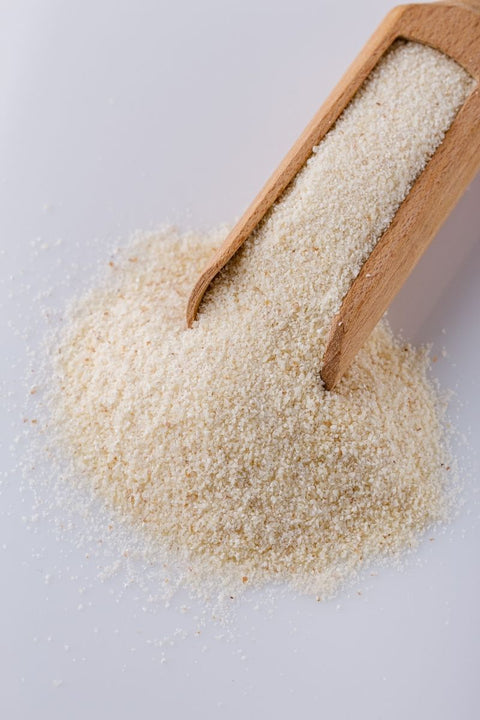
The Build: 100% Coarse durum semolina wheat and pure water (zero eggs).
-
The Method: Forced through solid bronze dies under massive hydraulic pressure, producing rough, micro-fissured surfaces and hollow architectural tubes, spirals, and ruffles.
-
The Profile: Sturdy, toothsome, springy, and unapologetically chewy (al dente).
-
Where It Shines: Hearty Bolognese, braised ragùs, carbonara, cacio e pepe, amatriciana, all'arrabbiata, and chunky seafood.
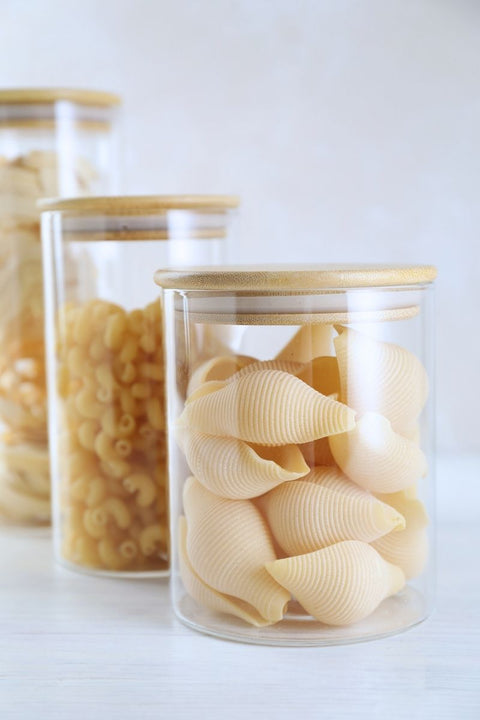
This is the backbone of Italian pasta culture. Extruded semolina pasta is built like an architectural bridge. Whether you grab it fresh from our kitchen (where it cooks in a lightning-fast 2 to 4 minutes with an electric, springy chew) or slowly dried at low heat (giving you unmatched pantry shelf life with that classic al dente bite), the structural integrity remains identical. It holds its shape, traps chunky bits, and binds pan emulsions with ease.
The Verdict: Match the Tool to the Sauce
Stop asking which pasta is "better." Start asking what your sauce needs:
-
If you want a pillow-soft ravioli or a feather-light ribbon swimming in browned sage butter, reach for rolled egg pasta.
-
If you want a muscular, toothsome bite that grips rich sauce and stands up to aggressive pan tossing, bronze-extruded semolina pasta—fresh or dried—is the undisputed champion.
Kitchen Pro-Tip & Gear Pick
The Tool: Marcato Atlas 150 Manual Pasta Sheeter & Fluted Brass Pastry Wheel
Why We Use It: While we handle the heavy hydraulic bronze extrusion for your weeknight ragùs, making delicate hand-rolled egg pasta at home on a Sunday afternoon is a true rite of passage. The Marcato Atlas 150 has been hand-built in Italy since 1930 and remains the undisputed gold standard for rolling paper-thin egg sheets.
(Shop our favorite: Marcato Atlas 150 Italian Pasta Machine / Brass Pastry Wheel)
Disclosure: Some of the links above are affiliate links. If you purchase through them, we may earn a small commission at no additional cost to you. We only recommend kitchen gear we genuinely use, beat up, and trust in our own kitchen.
Comments (0)
There are no comments for this article. Be the first one to leave a message!