
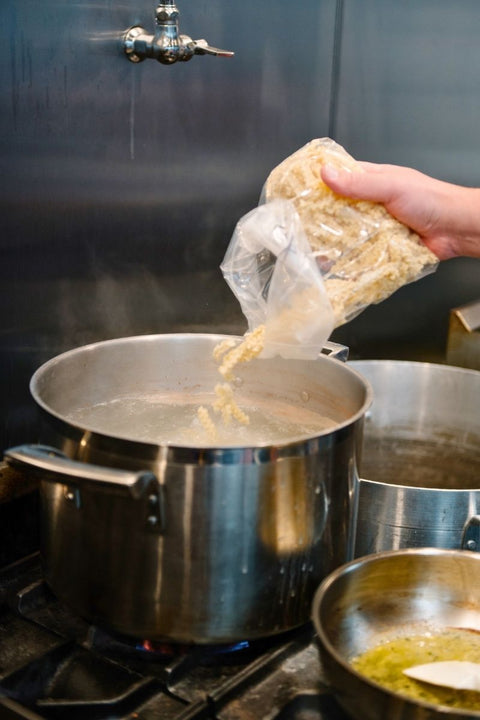
In Italian, al dente translates directly to "to the tooth." It does not translate to "crunchy in the middle," and it sure as hell doesn't mean "boiled until limp, waterlogged, and defenseless."
True al dente is that elusive sweet spot where the wheat starch has hydrated completely, but the gluten proteins still push back with a springy, elastic resistance when your molars come down.
If you can crush a piece of pasta against the roof of your mouth with your tongue, it isn't al dente—it's baby food. Here is why texture is everything.
1. The Science of the Chew
Premium durum semolina is loaded with dense plant proteins (specifically glutenin and gliadin). When mixed with water and extruded under pressure, these proteins build a firm, spring-loaded matrix around every starch granule.
When cooked to true al dente:
-
The starches swell without bursting into mushy paste.
-
The protein mesh holds firm, giving each cut architectural integrity.
-
Overcook it by two minutes, and that structural web snaps. Water floods the interior, the starch gelatinizes completely, and your pasta turns gummy.
2. The Digestion Advantage
Here is a pleasant surprise for health-conscious carb lovers: al dente pasta has a lower glycemic index than soft-boiled pasta.
Because the gluten matrix remains intact, your digestive enzymes break down the carbohydrates at a gradual, steady pace. That means steady, sustained energy without the rapid blood sugar spike and subsequent afternoon food coma caused by overcooked noodles.
3. The 2-Minute Pan Finish Secret
If you rely on the timer on the back of the box and drain your pasta in a colander, you're missing the most critical technique in pasta making.
Always pull your pasta out of the water 2 minutes before the suggested cook time.
-
Transfer the undercooked noodles straight into a wide skillet where your warm sauce is waiting over medium heat.
-
Splash in a couple of ounces of starchy pasta water.
-
Vigorously toss and stir the pasta directly inside the bubbling sauce for the final 90 to 120 seconds.
As the thirsty noodles finish cooking, they drink in seasoned sauce rather than plain water. The loose surface starches emulsify with the sauce fats, producing a glossy, restaurant-grade plate where the noodle and the sauce become one.
Kitchen Pro-Tip & Gear Pick
The Tool: 3.5-Quart Curved Stainless Saucier Pan (Padella Salta Pasta)
Why We Use It: Standard straight-sided sauté pans trap food in the corners and cause sauce to splash over the rim when you toss pasta. A traditional saucier has curved, bowl-like walls specifically engineered for the circular wrist flick (saltare la pasta), creating glossy emulsions without coating your stovetop.
(Shop our favorite: Made In 3 Qt Stainless Saucier / All-Clad D3 Stainless Saucier)
Disclosure: Some of the links above are affiliate links. If you purchase through them, we may earn a small commission at no additional cost to you. We only recommend kitchen gear we genuinely use, beat up, and trust in our own kitchen.
Comments (0)
There are no comments for this article. Be the first one to leave a message!