
There is nothing sadder in home cooking than babysitting a braised ragù for four hours, plating it up, and watching all that rich meat slide right off your noodles and pool at the bottom of the bowl like a broken promise.
Nine times out of ten, the sauce isn't the problem. Your pasta shape is.
In an Italian kitchen, pasta shapes aren't decorative whims designed to look cute on a shelf. Every fold, flute, hollow tunnel, and ridge is a deliberate piece of culinary engineering. When you match the geometry of the cut to the viscosity of your sauce, every forkful hits like a unified dish instead of noodles wearing a loose jacket.
Here is how to stop committing sauce crimes in your own kitchen.
1. Heavy Ragùs & Braised Meats -> Ruffled & Ridged Cuts (Rigate)
-
The Physics: Chunky sauces packed with ground pork, braised short rib, or crumbled fennel sausage need structural scaffolding.
-
The Culprits: Radiatori, Mafalde, Fusilli
-
Why It Works: Those accordion ripples and fluted ruffled borders aren't for show—they act like tiny structural shelves. The coarse meat bits wedge themselves securely into the grooves instead of tumbling off your fork and back onto the plate.
2. Chunky Vegetables & Gooey Cheeses -> Deep Shells & Curved Tubes
-
The Physics: Dishes featuring sweet peas, roasted butternut squash, whole chickpeas, or heavy melted cheese require concave catchers.
-
The Culprits: Canestri, Clam Shells, Girelle
-
Why It Works: As you toss the pasta in a hot skillet, the deep inner caves scoop up bits of food like miniature spoons, trapping diced vegetables and molten cheese sauces on the inside.
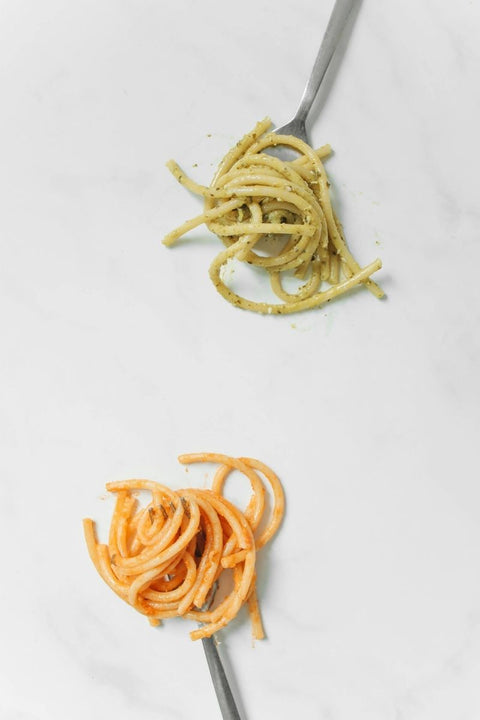
3. Silky Pestos & Herb Oil Emulsions -> Long, Elegant Strands
-
The Physics: Sauces made from olive oil, butter emulsions, garlic, or finely hammered herb pestos need continuous surface area.
-
The Culprits: Fettuccine, Linguine, Spaghetti
-
Why It Works: Twirling long strands with a fork creates friction that pulls a glossy sheen of oil and herb paste all the way up the noodle without overwhelming it.
4. Broths & Brodo -> Tiny Cuts (Pastina)
-
The Physics: Light, aromatic broths will swallow big pasta cuts whole. You want delicate shapes that gently rest on a soup spoon.
-
The Culprits: Ditalini, Fusilliti, Pastina
-
Why It Works: Tiny cuts hydrate evenly and integrate into the broth rather than hogging the entire spoon.
The House Rule to Memorize
Light sauces call for long strands; heavy sauces demand short, muscular shapes. Keep that in your back pocket, and you'll never end up with naked noods again. 😏
Kitchen Pro-Tip & Gear Pick
The Tool: Heavy Enameled Cast Iron Dutch Oven (5.5 to 7 Qt)
Why We Use It: Pairing heavy cuts like Mafaldine with braised meat demands an unbroken, gentle simmer over four hours. Thin-bottomed pots scorch tomato paste and dry out meats; heavy enameled cast iron holds consistent, radiant heat so your ragù melts down into velvet.
(Shop our favorite: Lodge Enameled Dutch Oven / Le Creuset Signature Round Dutch Oven)
Disclosure: Some of the links above are affiliate links. If you purchase through them, we may earn a small commission at no additional cost to you. We only recommend kitchen gear we genuinely use, beat up, and trust in our own kitchen.
Comments (0)
There are no comments for this article. Be the first one to leave a message!