
Go grab an average $\$1.29$ box of supermarket pasta, hold a piece up to the light, and look closely. It's shiny. It feels completely slick. It looks like it was molded out of industrial yellow plastic.
Now grab a box of craft pasta. It's pale, powdery, and feels like fine sandpaper.
That difference isn't an accident. It comes down to a fundamental philosophical divide in the pasta world: Teflon dies versus solid bronze dies.
The Corporate Shortcut: Teflon Extrusion
Most mass-market commercial pasta is blasted through Teflon-coated dies. Teflon is slick, fast, and cheap. It allows factory machines to pump tens of thousands of pounds of dough per hour without wearing down equipment or sticking.
The catch? Teflon polishes the outer layer of the dough completely smooth. When that pasta hits boiling water, that slick skin provides zero traction. Your sauce has nothing to grab onto, so it slides right down the noodle and collects in a puddle on your plate.
The Old-School Way: Solid Bronze Dies
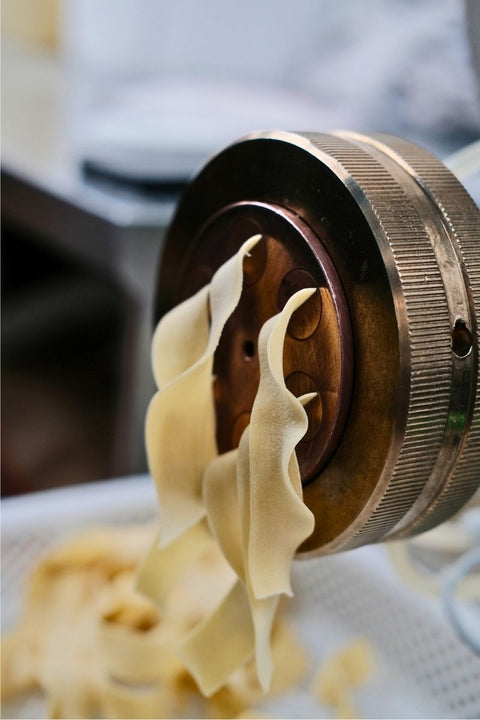
At DSM Pasta Co., we refuse to touch Teflon. We extrude our dough exclusively through heavy, solid bronze dies.
Bronze is a traditional, porous, stubborn metal. When dense semolina dough is forced through bronze molds under punishing hydraulic pressure, the friction naturally tears open microscopic fissures and jagged ridges across the surface of the pasta (la sfoglia).
Here is why that rough texture completely transforms your plate:
-
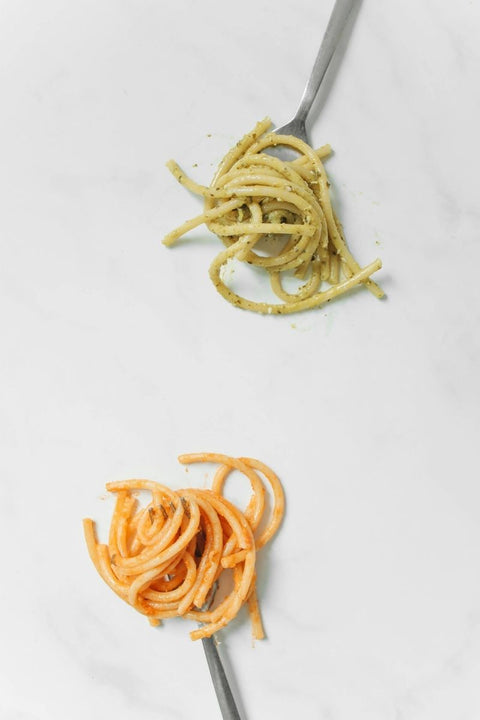
The Velcro Effect: Those microscopic tears act like physical anchors. When you toss your noodles in a pan, the sauce grips directly to the coarse surface instead of sliding off into oblivion.
-
Starch Emulsions Made Easy: Bronze-cut pasta sheds loose starches into your cooking water. When you ladle that cloudy pasta water into a hot pan with butter or oil, those starches bind fat and water together into a creamy, restaurant-grade pan sauce. Teflon pasta simply can't do that.
-
An Honest Al Dente: Bronze extrusion demands a firmer, low-moisture dough. The gluten network stays tight and resilient, giving you that distinct toothsome bite that never collapses into a waterlogged sponge.
Bronze extrusion takes longer, wears out our tooling faster, and costs more to run. But the first time your sauce clings to your noodles like velvet, you'll never buy a slick grocery store box again.
Kitchen Pro-Tip & Gear Pick
The Tool: Stainless Steel Wire Skimmer / Spider Strainer
Why We Use It: When you cook bronze-die pasta, that rough outer crust sheds valuable starches straight into the water. Never dump all that starch down the sink with a colander. Use a wide spider skimmer to lift noodles directly out of the rolling boil into your waiting sauce skillet—carrying just the right amount of cloudy cooking water along with them.
(Shop our favorite: OXO Good Grips Stainless Steel Spider Strainer)
Disclosure: Some of the links above are affiliate links. If you purchase through them, we may earn a small commission at no additional cost to you. We only recommend kitchen gear we genuinely use, beat up, and trust in our own kitchen.
Comments (0)
There are no comments for this article. Be the first one to leave a message!