
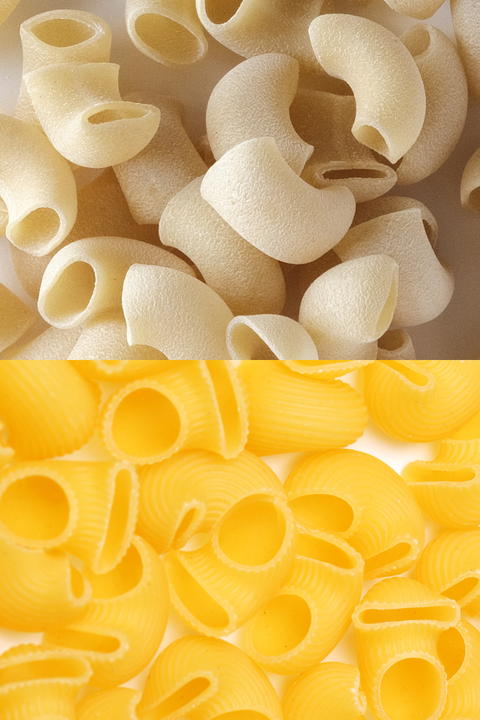
If you’ve ever polished off a bowl of supermarket pasta on a Tuesday night only to spend the next four hours unbuttoning your waistband, groaning on the sofa, and cursing carbohydrates—you aren’t alone.
For years, diet culture and wellness influencers have blamed wheat. They tell you to cut out carbs, avoid gluten like the plague, and stock your pantry with joyless chickpea noodles that disintegrate into grainy mush the second they hit boiling water.
Frankly, they’re diagnosing the wrong villain.
The culprit behind your painful post-dinner bloat usually isn’t the wheat itself. It’s what massive commercial factories did to that wheat long before it landed on the grocery store shelf.
Here is the culinary and physiological reality behind the "pasta coma"—and why traditional, small-batch slow-drying is the cure your gut has been waiting for.
The Industrial Shortcut: 240°F Flash-Drying
To understand why commercial pasta leaves a brick in your stomach, you have to look at how modern grocery store pasta is manufactured.
A century ago, pasta was dried the old-fashioned way: hanging in ambient Mediterranean breezes or resting on wooden screens in climate-controlled rooms for days. It was patient, gentle, and unhurried.
Then came corporate spreadsheets and industrial automation.
To maximize factory throughput and crank out millions of blue boxes per day, mass-market manufacturers abandoned patience. Instead of drying pasta over several days, industrial factories push extruded dough into high-heat convective drying ovens.
We aren't talking gentle warmth. These commercial chambers blast raw dough at temperatures ranging from $180^\circ\text{F}$ to over $240^\circ\text{F}$ ($82^\circ\text{C}$ to $115^\circ\text{C}$).
By superheating the drying tunnel, a factory can dehydrate a batch of pasta in under two hours.
It’s an operational miracle for corporate quarterly margins. But it is an absolute disaster for your digestive tract.
What Extreme Heat Does to Wheat Protein
Wheat is not just inert flour; it is a delicate matrix of complex starches and proteins (principally glutenin and gliadin).
When corporate factories blast fresh dough with searing $240^\circ\text{F}$ dry heat, two destructive chemical reactions happen almost instantaneously:
1. The Denaturing of Proteins into an "Indigestible Rubber"
Under high-heat industrial flash-drying, the natural wheat proteins are violently denatured and cross-linked. Instead of remaining an elastic, porous protein network that your body’s digestive enzymes can break down smoothly, the proteins fuse into an unnaturally tight, rubbery, hydrophobic matrix.
When that scorched pasta reaches your stomach, your natural digestive enzymes (pepsin and proteases) struggle to penetrate the hardened protein barrier. The pasta sits stalled in your stomach for hours, fermenting improperly and feeling like a literal block of lead.
2. Gelatinized, Damaged Starches
High-heat drying thermally damages and pre-gelatinizes the exterior semolina starches. When dropped into water, flash-dried commercial pasta tends to hydrate unevenly—yielding a slick, gummy exterior while trapping raw, hard starch cores inside.
This damaged starch structure ferments rapidly in the lower gut, triggering excess gas, abdominal distension, and that familiar, groaning belly bloat.
3. Destruction of Natural Flavor & Micronutrients
Scorching wheat dough at extreme temperatures bakes out the grassy, sweet, nutty aroma inherent to high-grade durum semolina. It is why standard boxed pasta tastes like cardboard until you drown it in heavy jarred sauce—the living flavor was incinerated in a 2-hour factory cycle.
The Traditional Cure: Low-Temperature Slow Drying
At DSM Pasta Co., our production philosophy is governed by two founders with over 40 combined years in high-volume, scratch-cooking restaurant hospitality. We spent decades watching how guests feel after dining, and we flat-out refuse to cut industrial corners.
We dry our cuts the exact opposite way: patiently, at low, gentle temperatures over 48 to 72 hours.
Here is why that patience changes everything for your digestive system:
┌─────────────────────────────────────────────────────────────────────────┐
│                      THE DRYING METHOD COMPARISON                       │
├──────────────────────────────────┬──────────────────────────────────────┤
│  INDUSTRIAL FLASH-DRIED (2 HRS)  │  DSM PASTA CO. SLOW-DRIED (48–72 HRS)│
├──────────────────────────────────┼──────────────────────────────────────┤
│ • Dried at 180°F – 240°F+        │ • Dried at gentle room temperatures  │
│ • Proteins scorched & denatured  │ • Natural protein structure intact   │
│ • Creates heavy digestive bloat  │ • Smooth, effortless enzyme breakdown│
│ • Slick, slippery exterior       │ • Porous, sauce-gripping microtexture│
│ • Dead, bland, cardboard flavor  │ • Nutty, sweet, aromatic durum wheat │
└──────────────────────────────────┴──────────────────────────────────────┘
When durum wheat dough is allowed to dry gradually:
-
The Protein Lattice Remains Natural: Gluten structures stay porous and supple. Your stomach acids and digestive enzymes can penetrate and break down the food smoothly and rapidly.
-
Starches Stay Intact: Starches hydrate evenly during boiling, eliminating painful intestinal fermentation.
-
Clean, Sustained Energy: You leave the dinner table feeling satisfied and energized—never sluggish, bloated, or needing to collapse on the couch in a carb coma.
The Co-Conspirator: Teflon vs. Bronze-Die Extrusion
The drying method isn't the only shortcut commercial brands take. Mass-market pasta is extruded through slick Teflon dies because Teflon dies are cheap, fast, and rarely need maintenance.
Teflon creates a shiny, slippery, plastic-smooth surface on the noodle. Because the surface is completely slick, sauce slides right off into a sad pool at the bottom of your bowl.
To compensate, home cooks often over-sauce or reach for heavy, fatty, heavily processed additives just to get flavor to stick—adding yet another heavy digestive tax to their meal.
At DSM Pasta Co., every single cut is pushed through traditional, heavy bronze dies.
Bronze dies tear the dough slightly as it exits the machine, creating a pale, chalky, sandpaper-like micro-texture. This coarse exterior acts like a sponge for cooking water and fats, emulsifying seamlessly with your sauce so every bite clings effortlessly without drowning the meal in grease.
You Don’t Have to Fear Real Carbs
If you have diagnosed celiac disease, you must strictly avoid gluten. But for the millions of people who feel "sensitive" to pasta, suffer from post-meal gut heaviness, or assume eating pasta requires paying a physical price—the culprit is rarely the wheat grain.
The culprit is industrial violence masquerading as modern convenience.
When pasta is made the right way—using 100% durum semolina, sculpted through bronze dies, and dried with days of gentle patience—it is one of the most honest, nourishing, clean-digesting foods on earth.
Stop punishing yourself with sad, ultra-processed diet noodles. Ditch the scorched industrial shelf filler that treats your body like a landfill.
Gather around the table, salt the water like you mean it, pour a glass of wine, and feast on real food.
EAT REAL CARBS.
Ready to Taste the Slow-Dried Difference?
Explore our small-batch, bronze-extruded cuts—crafted by restaurant veterans and shipped nationwide straight to your pantry.
Comments (0)
There are no comments for this article. Be the first one to leave a message!